
We keep hearing about automation, tools, and smarter systems, but the real conversation around AI vs Human Intelligence is not about replacement. It is about control.
Businesses today are integrating AI artificial intelligence into everything. Campaigns, customer journeys, analytics, even content.
But if you look closely, the companies actually growing are not the ones replacing people. They are the ones using AI with intention.
What AI vs Human Intelligence Looks Like in Real Work
When people discuss AI vs Human Intelligence, they often make it sound like a competition. In practice, it is much simpler.
AI works on patterns. Humans work on meaning.
AI can process thousands of data points in seconds. It can tell you what users clicked, where they dropped off, and which ad performed better.
But it cannot tell you why a message felt right to an audience.
That part still comes from experience.
At KoreSys, we see this every day. AI tools help speed up workflows, but the actual direction comes from people. That balance is part of the evolving tech culture at KoreSys, where automation supports thinking instead of replacing it.
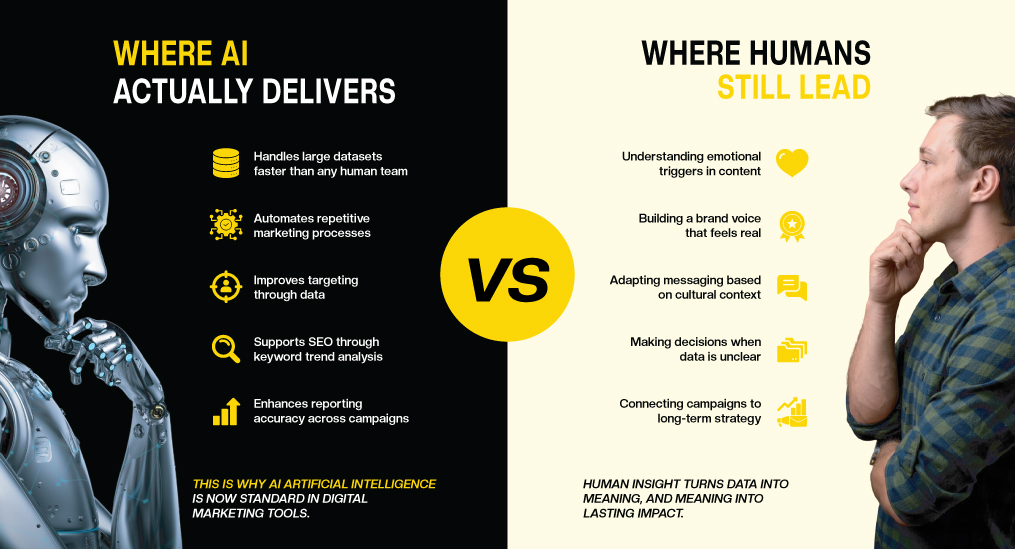
Where AI Artificial Intelligence Delivers the Most Value
AI is extremely good at structured tasks. It reduces time and improves consistency.
- Handles large datasets faster than any human team
- Automates repetitive marketing processes
- Improves targeting through behavioral data
- Supports SEO through keyword trend analysis
- Enhances reporting accuracy across campaigns
This is why AI artificial intelligence is now standard in digital marketing tools.
Where Human Intelligence Still Outperforms AI
Now here is the part most people ignore.
Human intelligence is not about speed. It is about judgment.
- Understanding emotional triggers in content
- Building a brand voice that feels real
- Adapting messaging based on cultural context
- Making decisions when data is unclear
- Connecting campaigns to long-term strategy
Even Sundar Pichai has pointed out that:
AI is one of the most important technologies, but its impact depends entirely on how humans apply it.
That distinction matters more than most people realize.
AI vs Human Intelligence in Marketing Strategy
If you work in digital marketing, you already see the difference.
AI suggests. Humans decide.
Tools can generate ad copies, blog drafts, and email sequences. But without human editing, most of that content feels flat.
A study by Harvard Business Review highlighted that:
AI-generated content often lacks emotional depth, which directly affects engagement rates.
That is exactly why strategy still needs people.
For regulations like data protection Pakistan businesses need human involvement to become even more critical. AI can process data, but it cannot interpret compliance in real-world scenarios.
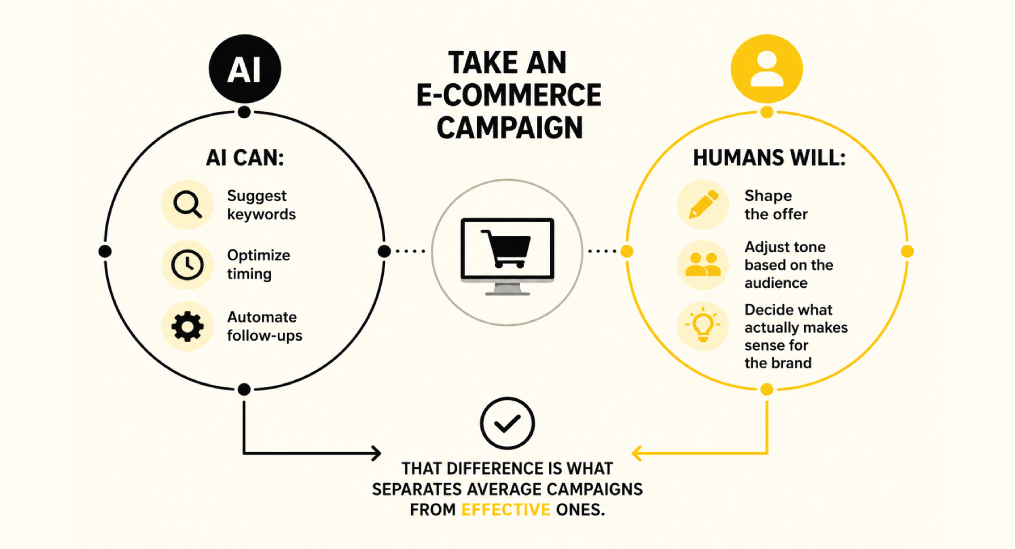
Take an e-commerce campaign.
AI can:
- Suggest keywords
- Optimize timing
- Automate follow-ups
Humans will:
- Shape the offer
- Adjust tone based on the audience
- Decide what actually makes sense for the brand
That difference is what separates average campaigns from effective ones.
Human-Centric Tech: The Future of Digital Work
There is a shift happening. Quiet, but very clear.
Businesses are moving toward Human-Centric Tech.
Not because AI is limited, but because customer expectations are changing.
People can tell when something feels automated. And they disengage faster than before.
In the AI future of work, the companies that win will not be the most automated. They will be the most aware.
At KoreSys, the approach is simple.
“Use AI to improve efficiency, but keep humans in control of decisions.”
That is what keeps customer experiences grounded.
Future of Work 2026: What Actually Changes
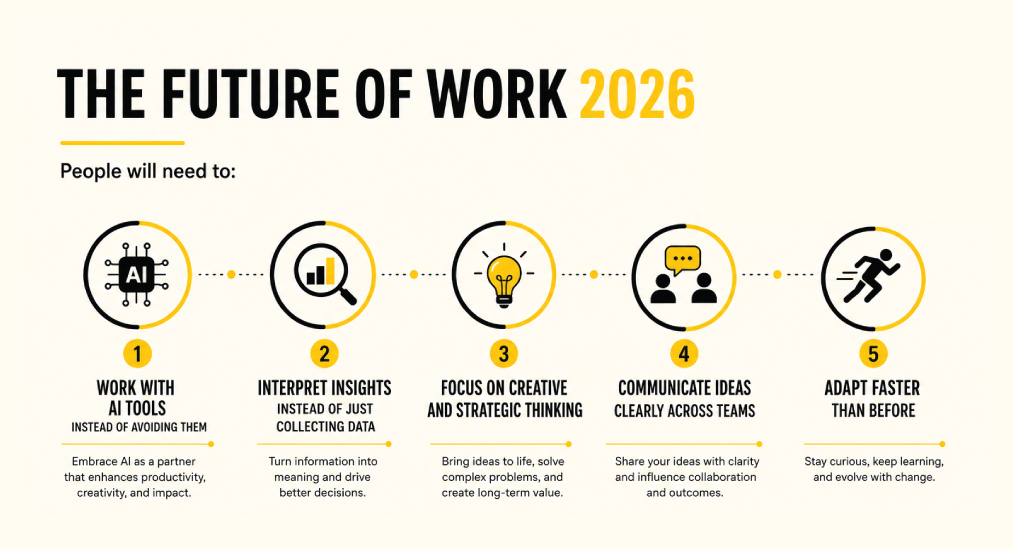
There is a lot of noise around the Future of Work 2026, most of it exaggerated.
Jobs are not disappearing. They are shifting.
According to the World Economic Forum,
AI will automate certain roles but also create new ones that require creativity, problem-solving, and human interaction.
That aligns with what we are already seeing.
You can also see this shift in how creative women in Pakistan are evolving. With access to AI tools, many are building personal brands, launching businesses, and monetizing skills at scale.
AI did not replace them. It expanded their reach.
Limitations of AI That Businesses Must Understand
AI is powerful, but it has clear boundaries.
It does not understand context the way humans do.
It cannot:
- Interpret sarcasm properly
- Handle sensitive communication effectively
- Build real relationships
- Make ethical decisions independently
Even Elon Musk has repeatedly warned people about AI usage.
AI needs careful human oversight because its capabilities do not come with judgment.
That gap is where human intelligence becomes essential.
Why Human Intelligence Still Drives Business Growth
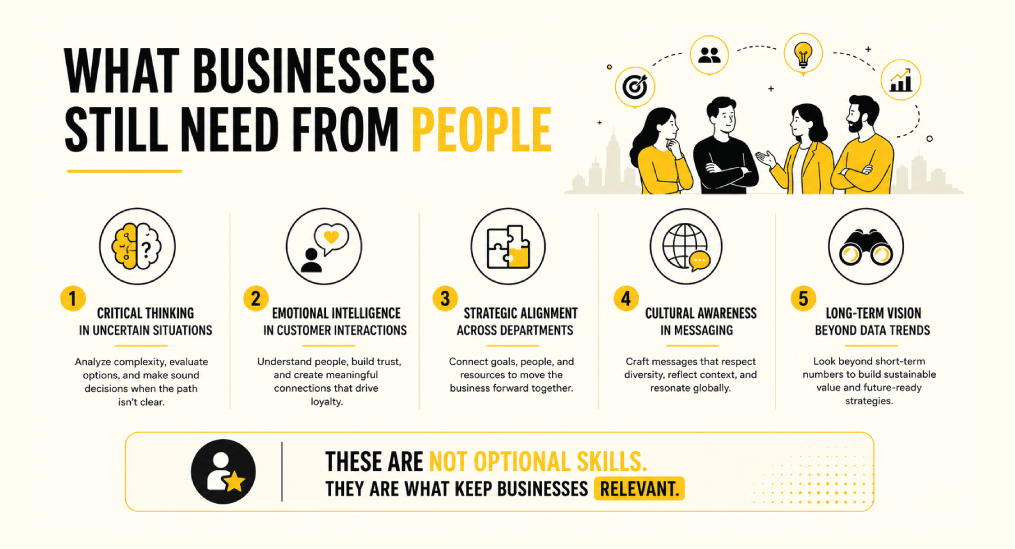
If you look at successful companies, they all have one thing in common. “Strong decision-making.”
AI can support that process. It cannot replace it.
In sectors like IT sourcing Pakistan businesses need technical execution. But without human understanding of business goals, even the best systems fail to deliver value.
The Real Answer to AI vs Human Intelligence
The conversation around AI vs Human Intelligence is often framed incorrectly.
It is not about who wins. It is about how they work together.
AI handles scale. Humans handle meaning.
The strongest businesses already understand this. They are not replacing teams. They are upgrading how those teams work.
At KoreSys, this mindset is part of how systems are built and teams are developed. It is also why work at KoreSys is not just about using tools, but about understanding when and why to use them.
AI is Not the Future on Its Own
AI is just a part of a larger system. Human intelligence is what gives that system direction.
The businesses that grow in the coming years will not be the most automated. They will be the most balanced.
A 2024 report by McKinsey & Company shows that AI adoption is increasing across industries, especially in marketing and strategy.
But adoption alone does not guarantee better outcomes, especially in areas that require judgment and context.
The Harvard Business Review highlights that AI lacks common sense and contextual understanding, which makes human judgment and creativity essential in decision-making processes.
This is where the difference between AI vs Human Intelligence becomes more relevant in real business scenarios.
That tells you something important. AI is being used. But it is not being trusted alone.
And that is exactly where the balance matters.
Combining automation with human insight, it focuses on building strategies that actually make sense in real markets. If you want to explore how this works in practice, you can contact us, and we can help you out.
